Future of Us

where civic imagination, insights, and infrastructure meet

Donate

The Visions · The living archive

Hall of Anythings

Browse the future worlds we heard imagined across the country, brought to life through art and story.

Free to explore, download, and share.
  • Illustrated by Yuko Okabe

  • Illustrated by Kate Medina

  • Illustrated by Kaeli McLeod

  • Illustrated by Catherine Wang

  • Illustrated by Grace Preston

  • Illustrated by Micheline Hess

  • Illustrated by Yuko Okabe

  • Illustrated by Grace Preston

  • Illustrated by Frank Myles

  • Illustrated by Yuko Okabe

  • Illustrated by Crys Ganatra

  • Illustrated by Crys Ganatra

  • Illustrated by Oak Bediako

  • Illustrated by Ania Siniuk

  • Illustrated by Oak Bediako

  • Illustrated by Kaeli McLeod

  • Illustrated by Micheline Hess

  • Illustrated by Ania Siniuk

  • Illustrated by Catherine Wang

  • Illustrated by David Dawkins

  • Illustrated by Ania Siniuk

  • Illustrated by Grace Preston

  • Illustrated by Frank Myles

  • Illustrated by Kate Medina

  • Illustrated by Frank Myles

  • Illustrated by Catherine Wang

  • Illustrated by David Dawkins

  • Illustrated by Kate Medina

  • Illustrated by Micheline Hess

  • Illustrated by Kaeli McLeod

  • Illustrated by Kaeli McLeod

  • Illustrated by Crys Ganatra

  • Illustrated by Micheline Hess

  • Illustrated by Frank Myles

  • Illustrated by David Dawkins

  • Illustrated by Yuko Okabe

  • Illustrated by Oak Bediako

  • Illustrated by David Dawkins

  • Illustrated by Oak Bediako

  • Illustrated by Crys Ganatra

  • Illustrated by Kate Medina

  • Illustrated by Grace Preston

  • Illustrated by Catherine Wang

  • Illustrated by Ania Siniuk

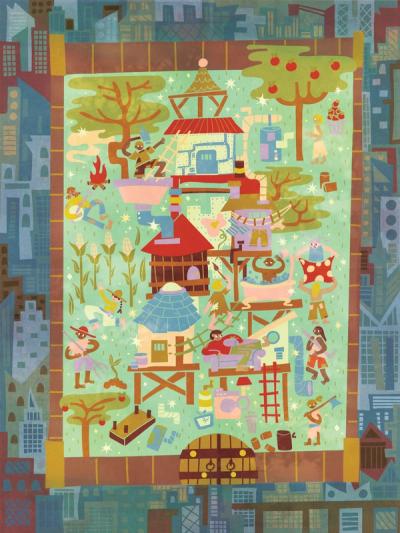
Artwork for “The Tools to Give Back”

Science & Tech Futures Los Angeles, CA

The Tools to Give Back

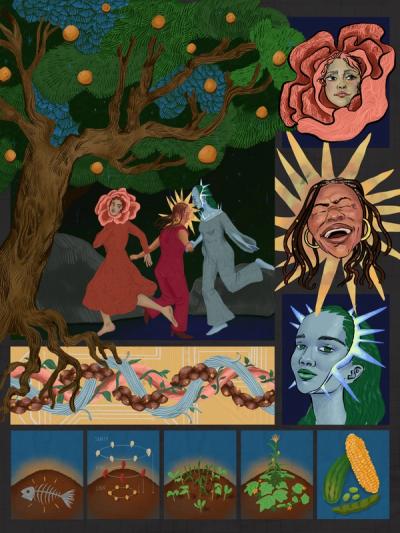
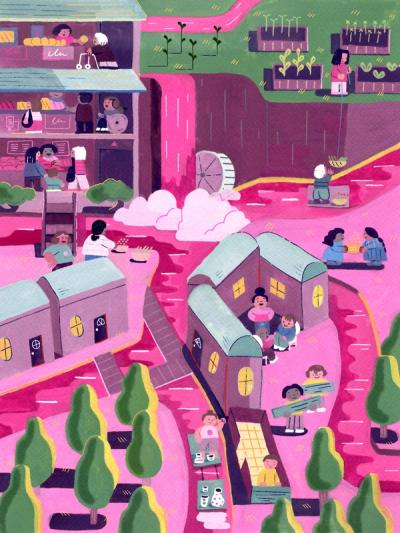
The technology embedded across the rooftops and walls of the oasis wasn’t designed in a lab far away from the people using it. It grew the same way the land did, slowly, shaped by the hands and questions of the people who lived there

Sensors threaded through the soil read moisture, nutrient levels, the presence of microbial life returning after years of absence. But these weren’t systems built to extract maximum yield. They were built to listen, to tell the people tending the land what it needed next, not what could be squeezed out of it

Solar panels lined the rooftops, feeding power back into a small grid that served the block before it served anyone else. Excess energy moved between neighbors instead of disappearing into some distant utility company’s ledger. The people decided where it went

Old irrigation equipment, repaired and modified by hand, ran on schedules tuned to actual rainfall instead of fixed timers. A young engineer who grew up nearby helped retrofit machines that had been abandoned on the original barren plot, turning broken infrastructure into something that finally served the people standing on it

None of this technology asked the land to behave differently than it wanted to. It paid attention instead, adjusting itself to match the rhythms already present: when the bats came out, when the fruit trees needed shade, when the soil needed rest instead of another planting cycle

The elders trained the next generation on how all of it worked, not just how to use it, but how to fix it, modify it, make it theirs. Knowledge moved freely, the way water did, the way light did

This was a different kind of intelligence built into the walls and rooftops. Not the kind that replaced human judgment, but the kind that extended it, gave it more eyes, more data, more ways to respond carefully to a piece of land finally being asked what it needed instead of what it could give

Illustrated by

Oak Bediako

A full list of the tour participants across the country who inspired this story, and gave their permission to be credited, is coming soon.