Future of Us

where civic imagination, insights, and infrastructure meet

Donate

The Visions · Four immersive worlds

The exhibits

For each of the four futures, a lead artist built an immersive world from the themes that surfaced across the tour. All four filled The Pearl during the festival. Walk through each one, piece by piece.
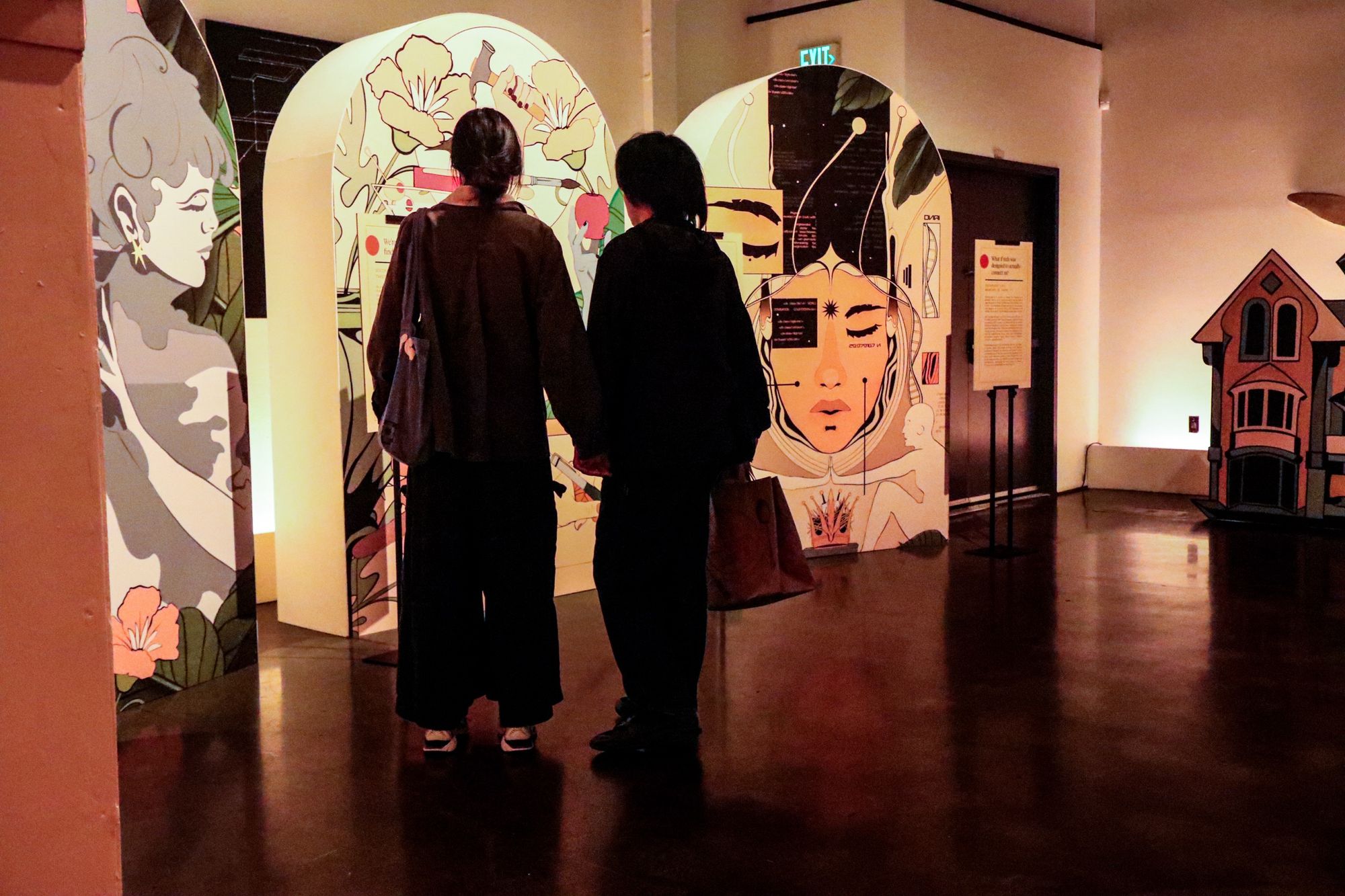
Two visitors stand together before illustrated arches in the headquarters exhibition

Green Futures · Exhibit 1 of 4

Healing Patterns

Sometimes repair isn’t just about restoration, but imagination.
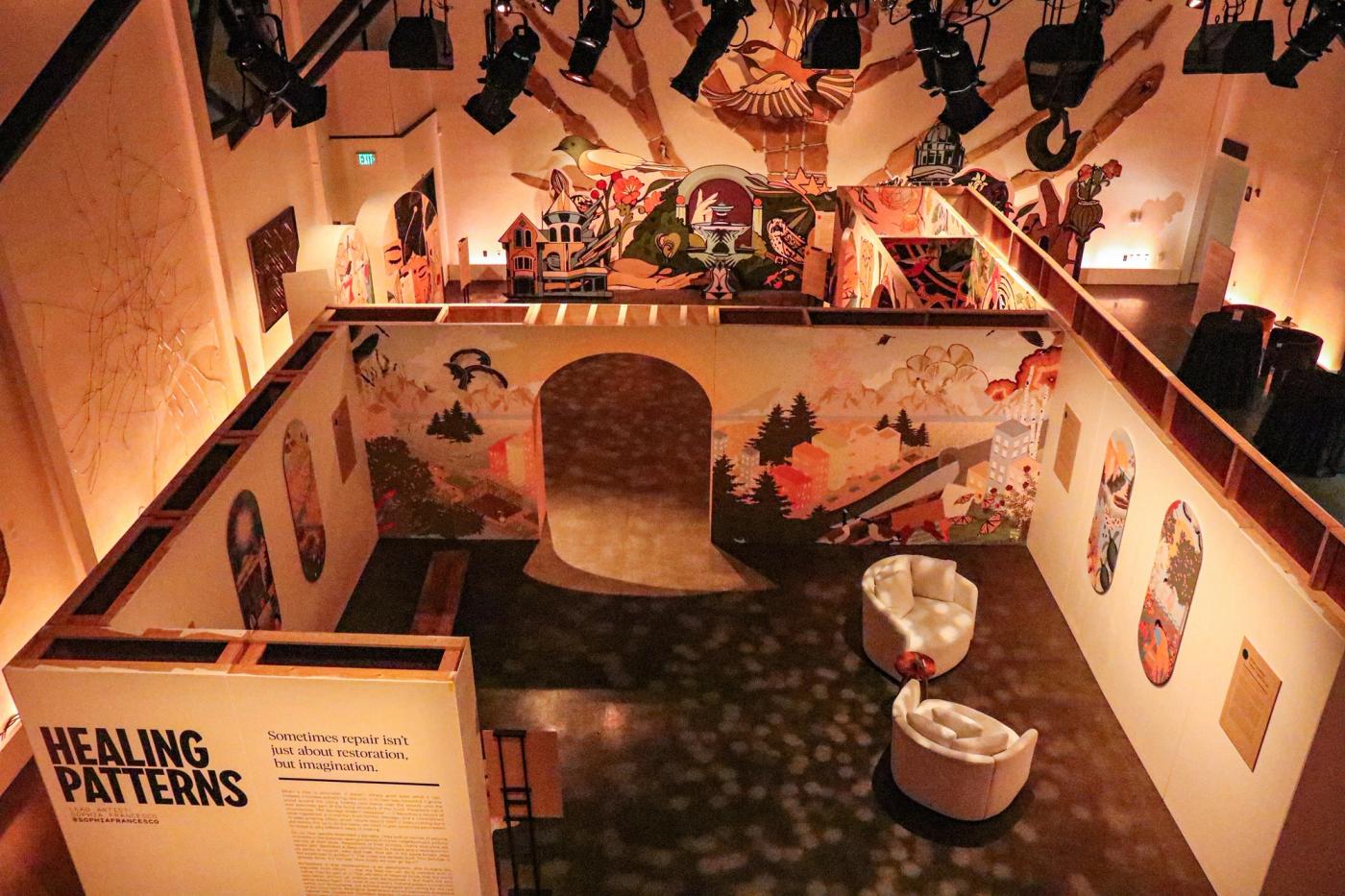
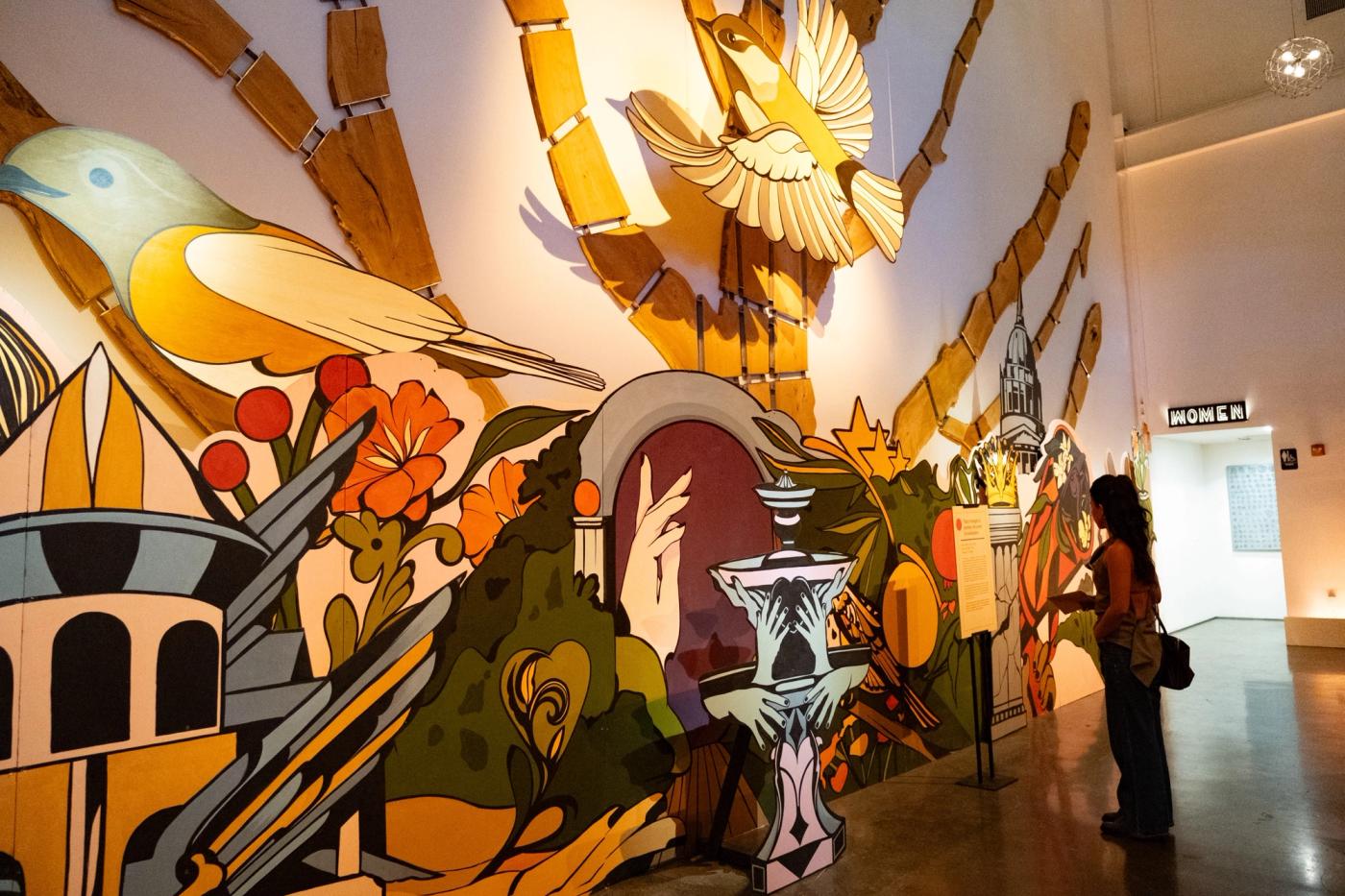
Visitors in the Healing Patterns exhibit at The Pearl, with its garden alcoves and window art

When a tree is wounded, it doesn't simply grow back what it lost. Instead, it creates something new and, in its own way, beautiful: it grows wood around the injury, folding new tissue over the wound until the scar becomes part of the living structure of the trunk. Foresters call it woundwood. The damage doesn't disappear — it becomes a record of what happened, a protection from further damage, and a commitment to keep growing. Often, when nature repairs itself, it looks nothing like it did before. For us to do the same, we need to give ourselves permission to imagine very different ways of healing.

Keep reading

On our tour, people described a paradox. They told us stories of playing in creeks in the summer, seeing a rare bird in their neighborhood, picking berries at their peak. Regardless of their politics, nearly everyone we spoke with described a deep connection to nature and a reverence for its ability to nourish, awe, and heal. And yet, in the same breath, they felt powerless to protect it. The cities are already built. The damage is already done. It’s too late. How could we ever go back?

Embedded in that helplessness is an assumption: that humans are separate from nature — that the best we can do is connect with it, rather than be part of it. That we were a negative force, that the world was better without us, pristine until we touched it. But that's not who we've always been. For most of our history, humans played critical roles within our ecosystems, our survival entangled with caring for the rest of the living world. Aboriginal Australians burned patchwork mosaics of habitat that supported countless species. Communities in the Pacific Northwest built "clam gardens" that grew several times more shellfish than untended shores. We’ve been seed carriers, soil builders, fire tenders — and the world we often call wilderness was, in many places, a vast garden we helped to tend.

We’ve changed the conditions, but we’re not stuck. Instead of asking ourselves the daunting question of how we go back, what would it look like for us to imagine new patterns of growth to seal the wound, and give ourselves a chance to repair the relationships that we’ve lost?

Take it homeWe translated this exhibit’s ideas into prompts for reflection. Download them free.

Healing Patterns reflection cardsPDF · 24 prompts
4 pieces · scroll for more

Social Futures · Exhibit 2 of 4

Slow Culture

Convenience doesn’t promise wellbeing.
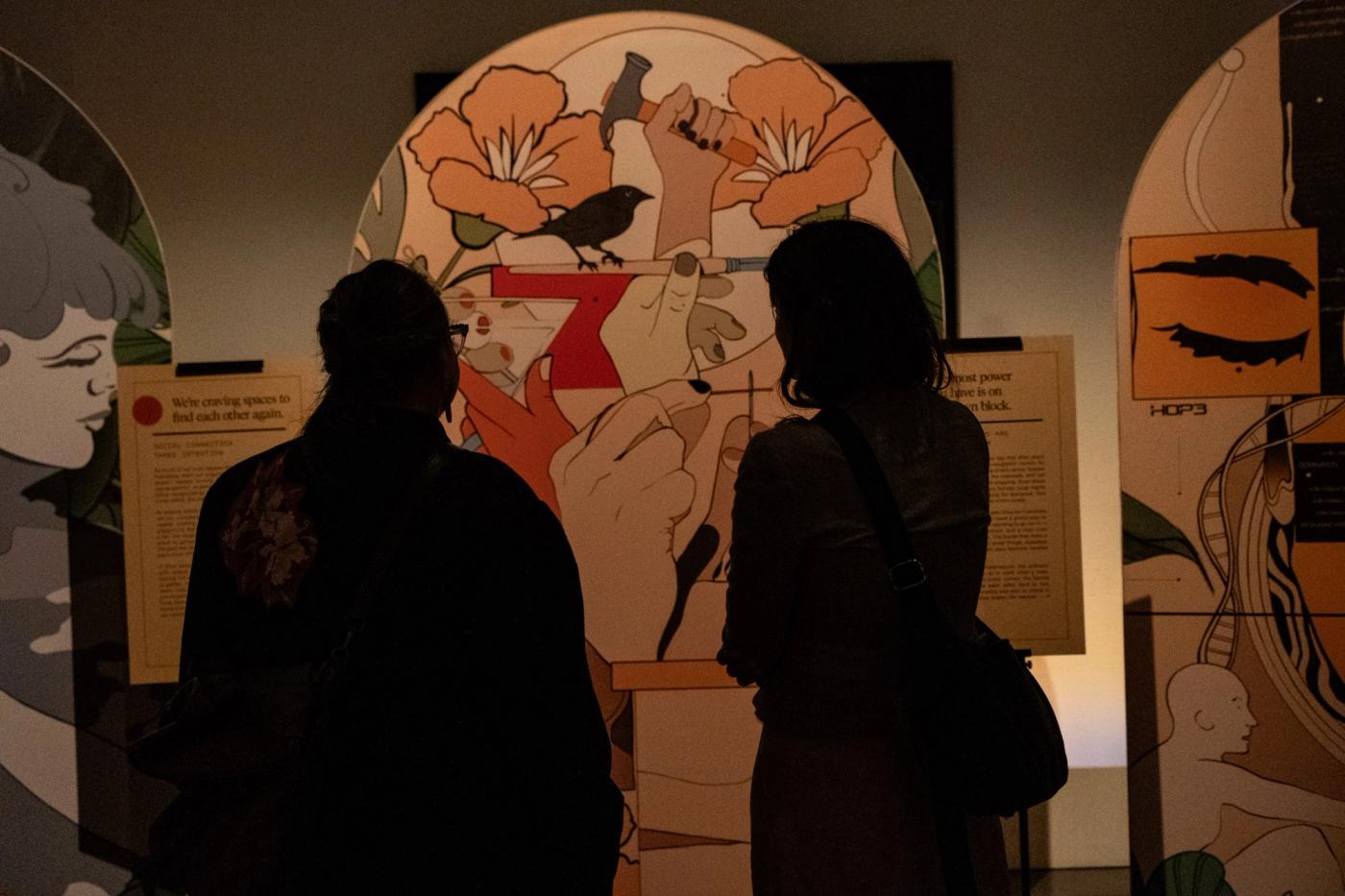
Two visitors reading a Slow Culture panel beside the painted arches
A visitor beneath the Slow Culture mural of birds, arches, and flowers
1 / 2

Instant everything, friction smoothed away, every errand and interaction collapsed into a single tap. We’ve optimized for efficiency, and in countless ways, the world is operationally easier than ever before. What’s less clear: did it make our everyday lives any better?

Keep reading

The push for optimization has often led to higher returns for companies, but also higher expectations of productivity for everyone else. In exchange, we get our packages faster, our entertainment on-demand, and endless choices at the supermarket. But we also feel more disconnected and overwhelmed. On our tour, the loudest message we heard was a longing for slowness, for space, for time. Turns out, people aren't lying awake wishing for more efficiency – they’re wishing for less.

People imagined futures full of lovely, slow things they too rarely have time for: a meal with friends you spent hours preparing together, a long afternoon walk through the park, a craft learned patiently by hand, evening chats on the front porch with your neighbors. People are tired of fast, and while some of the groups we spoke to are eager to push innovation forward at record-breaking speeds, most weren’t craving ways to do more with less. They’re craving ways to do less with more.

At its best, AI could give us a choice: to use new tools not just to do more, faster, but to reclaim time for care, friendship, creativity, civic life, and rest. But that’s unlikely to be the default. Without accountability, collective insistence, and clear north stars, we risk repeating the same pattern: more efficiency turning into higher productivity, more pressure to perform, and a growing sense that we have to run faster just to keep pace. We’ve chosen differently before. The five-day work week, the eight-hour day, the mid-day rest, the Sabbath – all of them reflect a hard-won decision that not every gain in efficiency should be converted into more work. More speed doesn’t guarantee more slowness. We have to decide a slower culture is worth optimizing for.

Take it homeWe translated this exhibit’s ideas into prompts for reflection. Download them free.

Slow Culture reflection cardsPDF · 24 prompts
6 pieces · scroll for more

Science & Tech Futures · Exhibit 3 of 4

Living Things

In the past, we shaped our lives to technology. In the future, we could shape technology to us.
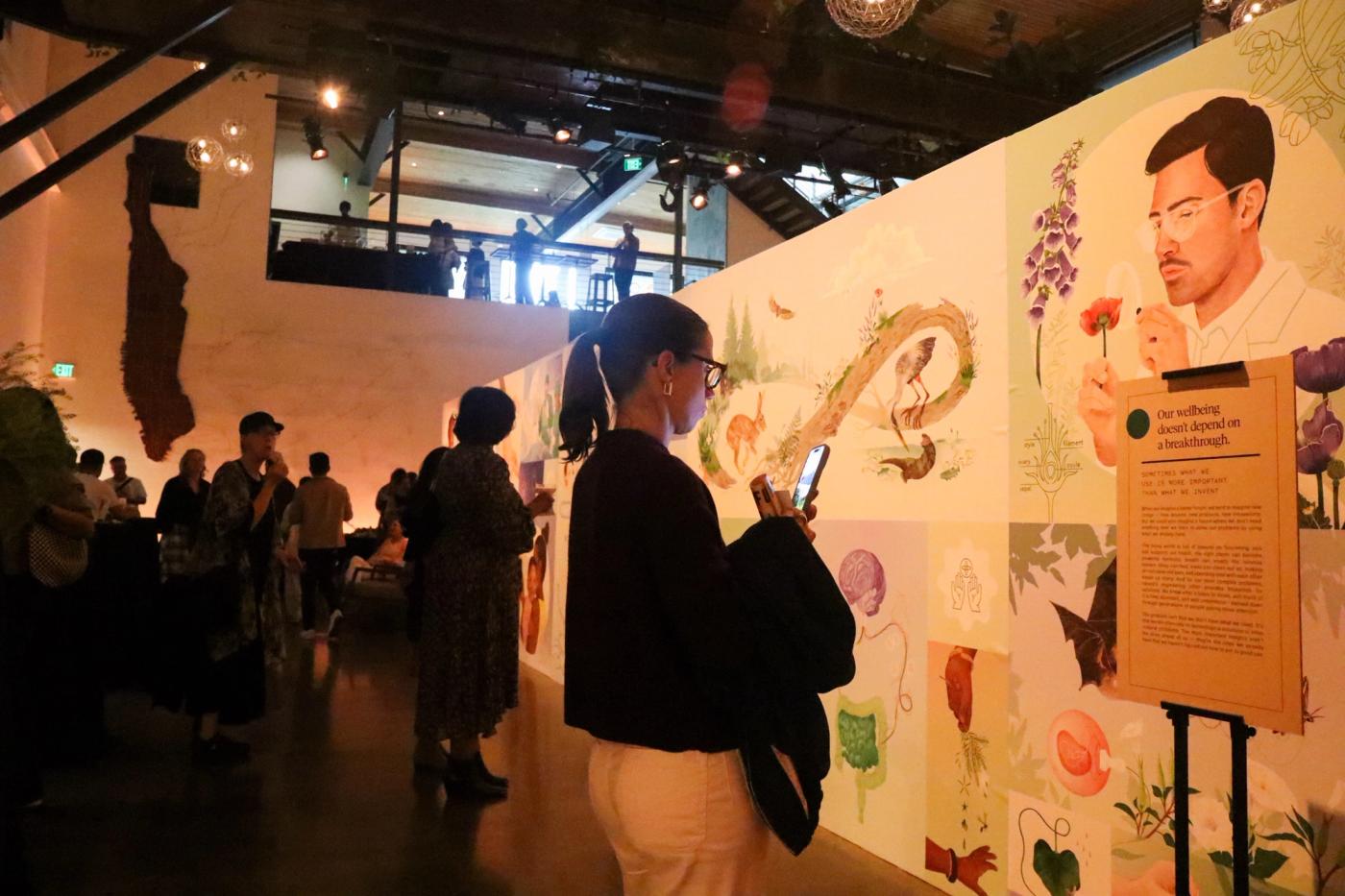
A visitor photographs the Living Things wall during the festival
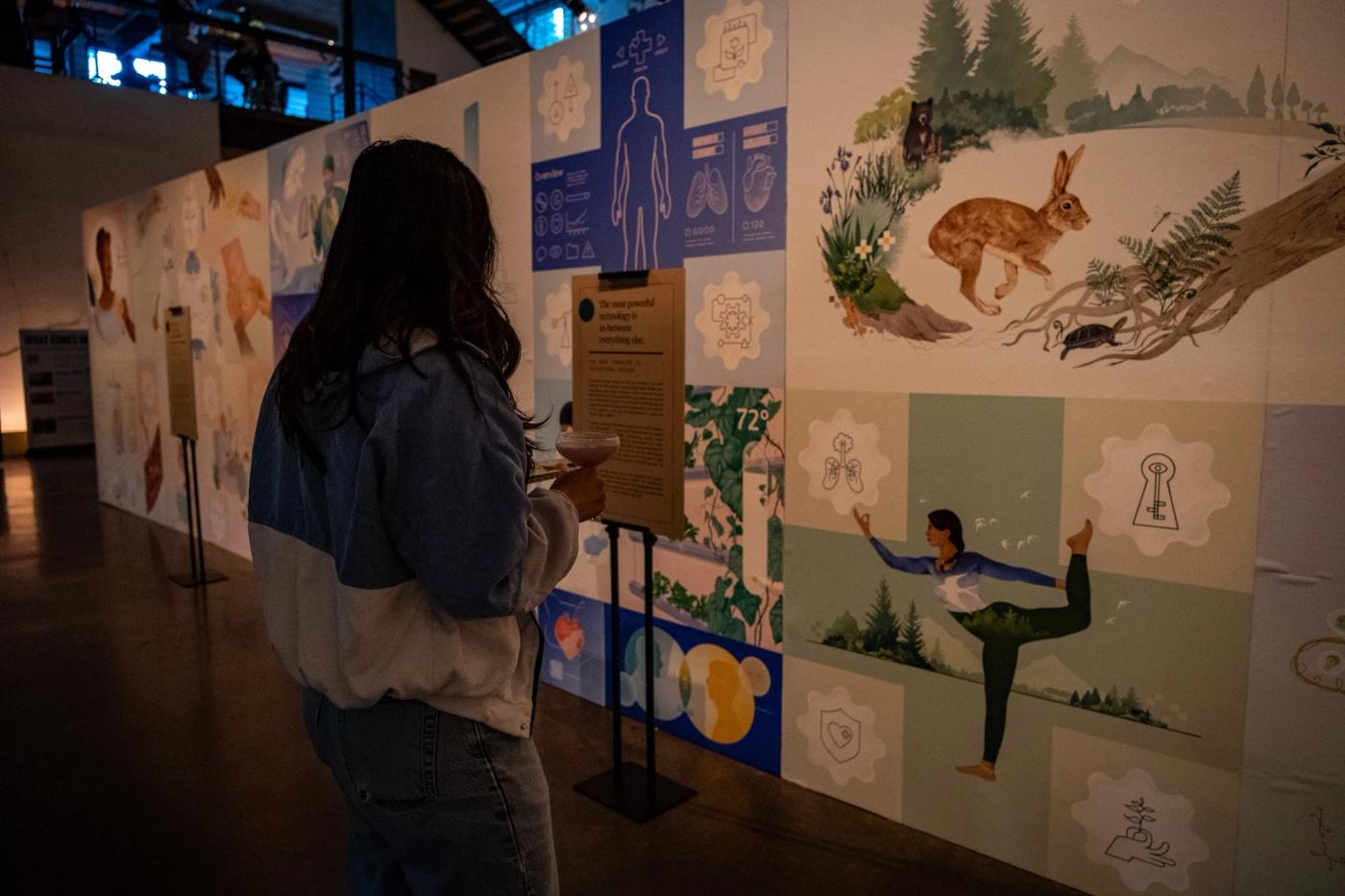
Visitors walking the length of the Living Things exhibit
1 / 2

We asked world class data engineers and biotechnologists to describe their visions for the future. They imagined worlds where technology made time and resources abundant, every person had what they needed to live well, and the friction of daily life dissolved into efficiency and ease. They shared personal stories and impassioned pitches for how new technologies could finally unlock collective flourishing.

Keep reading

And yet, everywhere from an old coal town in Utah to the South Side of Chicago, we were met with a very different tone. People were often pessimistic, not because they don't hope for a better future, but because they're not sure their idea of "better" lines up. And even if the tech could achieve their idea of better, they don't trust that the companies making the rules are incentivized to actually do it. There was a clear sense that the risks don’t offer much more than productivity, convenience, and the dreams of a few very rich men.

That skepticism speaks to a pattern — nearly every technology has brought both benefit and damage, rarely equally distributed. The printing press spread literacy, but also unleashed propaganda at unprecedented scales. The airplane opened up the world, but also polluted our skies. Social media kept us close to old friends, but left many lonelier than before. Technology has never been neutral — it bends toward service or harm depending on who's holding it.

Across the tour, the technology people were most interested in boils down to a simple north star: Does it make me and the people I love truly happier, healthier, and safer? Everything else is a novelty or distraction at best, and a weapon at worst.

We know what it looks like to mold ourselves to new technologies — rearranging our living rooms around televisions, our cities around cars, our workdays around laptops. We know what it looks like when the visions of the few become the realities for the many. This exhibit asks what might happen if we tried running it the other way.

Take it homeWe translated this exhibit’s ideas into prompts for reflection. Download them free.

Living Things reflection cardsPDF · 24 prompts
3 pieces · scroll for more

Media Futures · Exhibit 4 of 4

Making Sense

Welcome to 2050. A lot has changed.
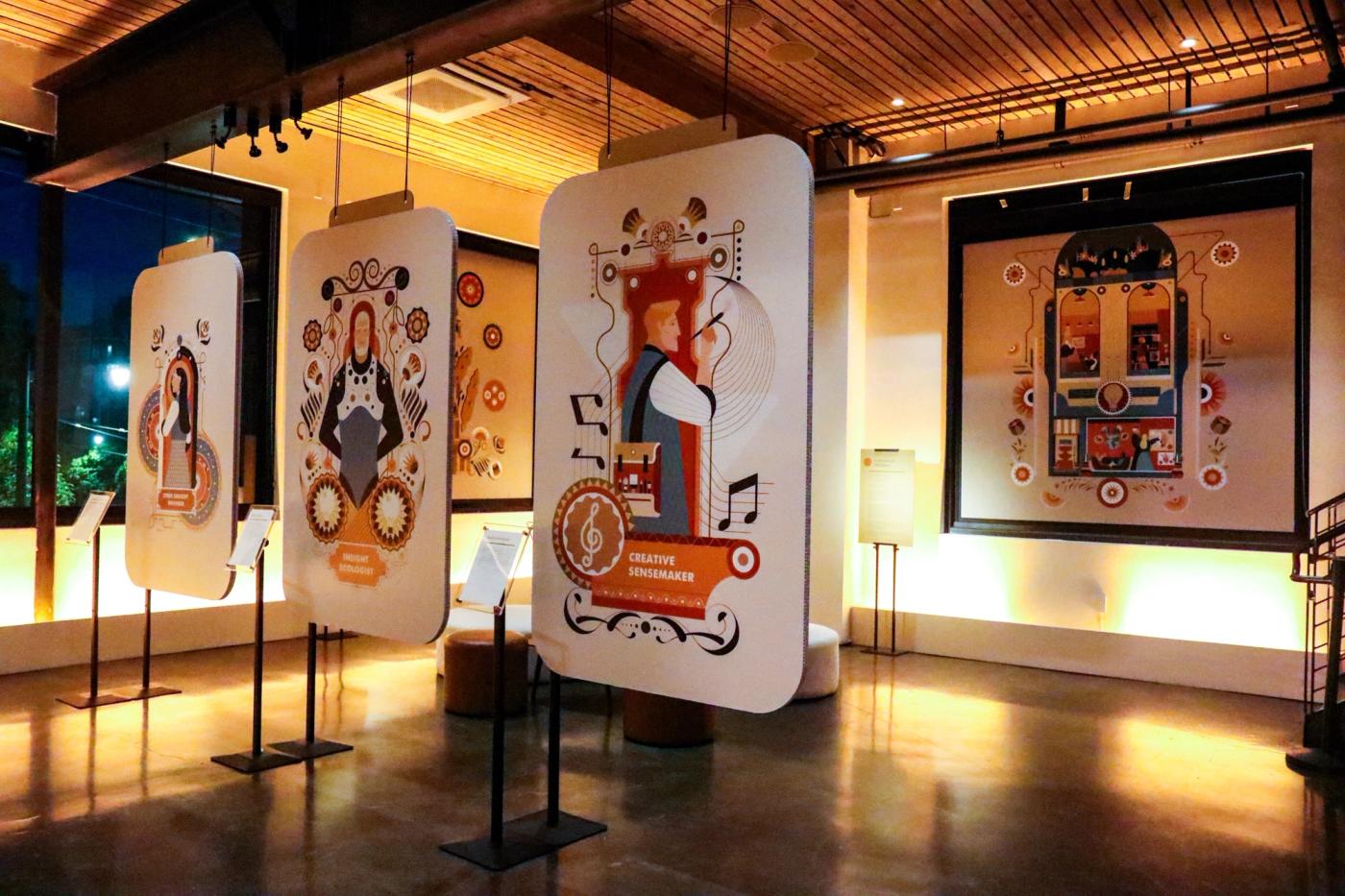
The Making Sense exhibit at The Pearl, with its tall illustrated panels

It's not perfect, and there are plenty of new problems left to solve. But we stopped drowning in information and started making sense of it — moving from a world of siloed, fragmented noise to one of creative, integrated meaning.

Keep reading

For a while, we thought the problem was access. Then AI made nearly all of it instant and free, and we realized access was never the hard part. The hard part was making sense of it all — turning information into something shaped by nuance, purpose, and collective insight. So we shifted the gaze of our technologies from maximizing profit to maximizing meaning. We built tools that connect people to people, not just to answers. We learned to treat what someone has lived through with the same rigor we once reserved for what they'd published.

We rebuilt trust, too. For years it had split between influencers accountable to no one and media empires accountable only to the powers that pay the bills. In their place, we grew a connective layer of sensemakers — independent, transparent, skilled less in breaking the news and more in weaving it together — working hand in hand with local newsrooms that had become community hubs. It turns out it's easier to build trust with people you can actually talk to.

We put the body back in the room. Knowledge stopped being something you stare at on a screen and became something you move through — creative, artful, spatial, sensory, shared. We built places for it: intentional, vibrant, open spaces where a retired organizer, an emerging artist, a busy parent, and a bioengineer could sit at one table and use each other's vantage points to better understand the whole.

And maybe most surprisingly, we decided that care counts — that checking in before diving in isn't a soft skill but a design decision, and that the relational layers of media are core infrastructure, not afterthought.

We didn’t get here because of perfect timing or technology. We got here because enough people insisted on a media ecosystem built for knowing better.

Take it homeWe translated this exhibit’s ideas into prompts for reflection. Download them free.

Making Sense reflection cardsPDF · 24 prompts
6 pieces · scroll for more

Want to see more stories?

The exhibits drew on dozens of individual stories, each brought to life by an artist. They all live in the Hall of Anythings.

See the collection →