A
YOU FOUND THETHE Network Lion
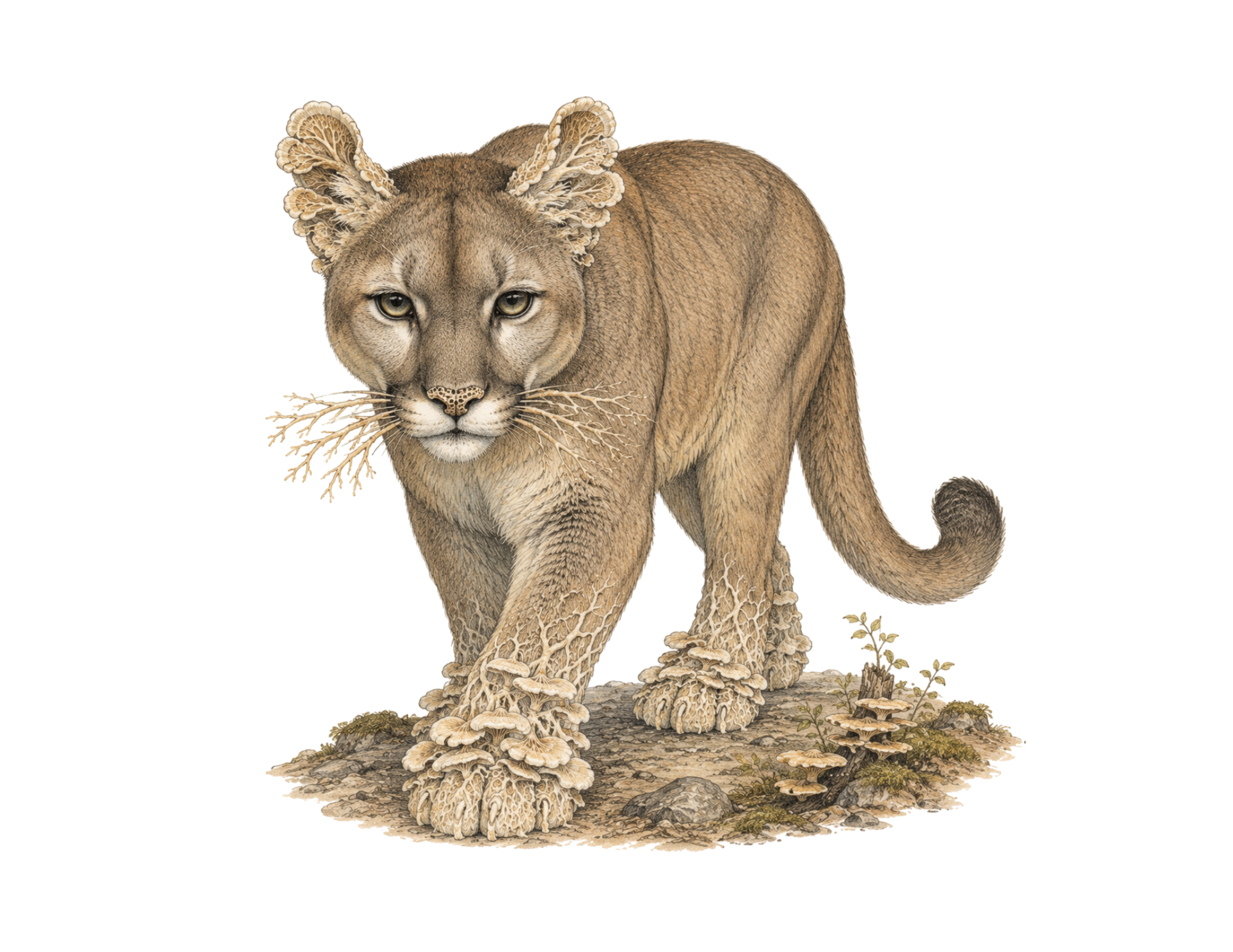
In the Network Lion’s future, the city nearly took over all wild spaces, creating huge distances between habitats that the local animals couldn’t bridge. The wild and green spaces became fragmented, turning forests into isolated islands of trees. The understory, all of the roots and mycelium beneath the ground, couldn’t communicate to keep the plants alive. Small mammals, reptiles, and even mountain lions suffered as they were left stranded in territories too small for their needs or population health.
Scientists tried to create a roaming creature that could help to refill the ground with the mycorrhizal fungi (an essential network of organisms that keep ecosystems thriving) back into the Bay Area. The goal was to reconnect and reintegrate the habitats from the ground up. Much to the scientist’s dismay, the Network Lion ended up becoming the fungi – with it taking over their ears and fur. But at least it spreads spores wherever it hunts!
It came back to the year 2026 to urge people to build the bridges and pathways, the corridors and waterways, and all of the other connective systems that it and so many other animals rely on to flourish, keeping their habitats connected physically, energetically, and nutritionally for both animals and society.
What kinds of culture and design could might help keep habitats connected and thriving across our city?
FIELD NOTES
How you Can Help the Network Lion’s Mission
In the state of California, mountain lions are strictly protected to prevent the extinction of isolated populations, especially those in Central and Southern California. Their role as top predators is vital for maintaining ecosystem balance but disconnected habitats are limiting their ability to do just that.
Mountain lions, like many other animals, rely on a connected habitat and large home territories to hunt, breed, and find refuge. But urban sprawl and habitat fragmentation break their wildlife corridors; roads, fences, and development interrupt their movement. Climate change impacts them too. Wildfires, drought, and disease harms both the lions and their ecosystems faster than either can recover. Along with habitat degradation, fear-based attitudes toward large predators are drastically reducing support for conservation despite their ecological importance. These are a species in need of our help.
Track mountain lions in California
with the Santa Cruz Puma Tracker.
Learn about how we can coexist
with mountain lions even in urban environments.
Learn more about the healthy ecosystems that wild cats need.
Get your students and kids involved
in mountain lion education with Felidae Conservation Fund’s K-12 educational programs.
Stay smart and safe outdoors
with this Wildcat Conflict Toolkit.
Check out Otis, the mountain lion in Marin on camera!
Follow Felidae Conservation Fund on Instagram to see more footage of wild cats.
Thank you to our contributing experts, Tanner Saul from the National Wildlife Federation, Chris Wilmers from the UC Santa Cruz Puma Project, and the Felidae Conservation Fund.
NEXT UP
SCOUTING SPOT #4Where nature flows and the worlds connect,
There's a place for explorers to land,
Full of science and art that could help you inspect:
Why this creature has kelp for a hand!
✦ Enter the destination as one word, all lowercase, no spaces. ✦