N
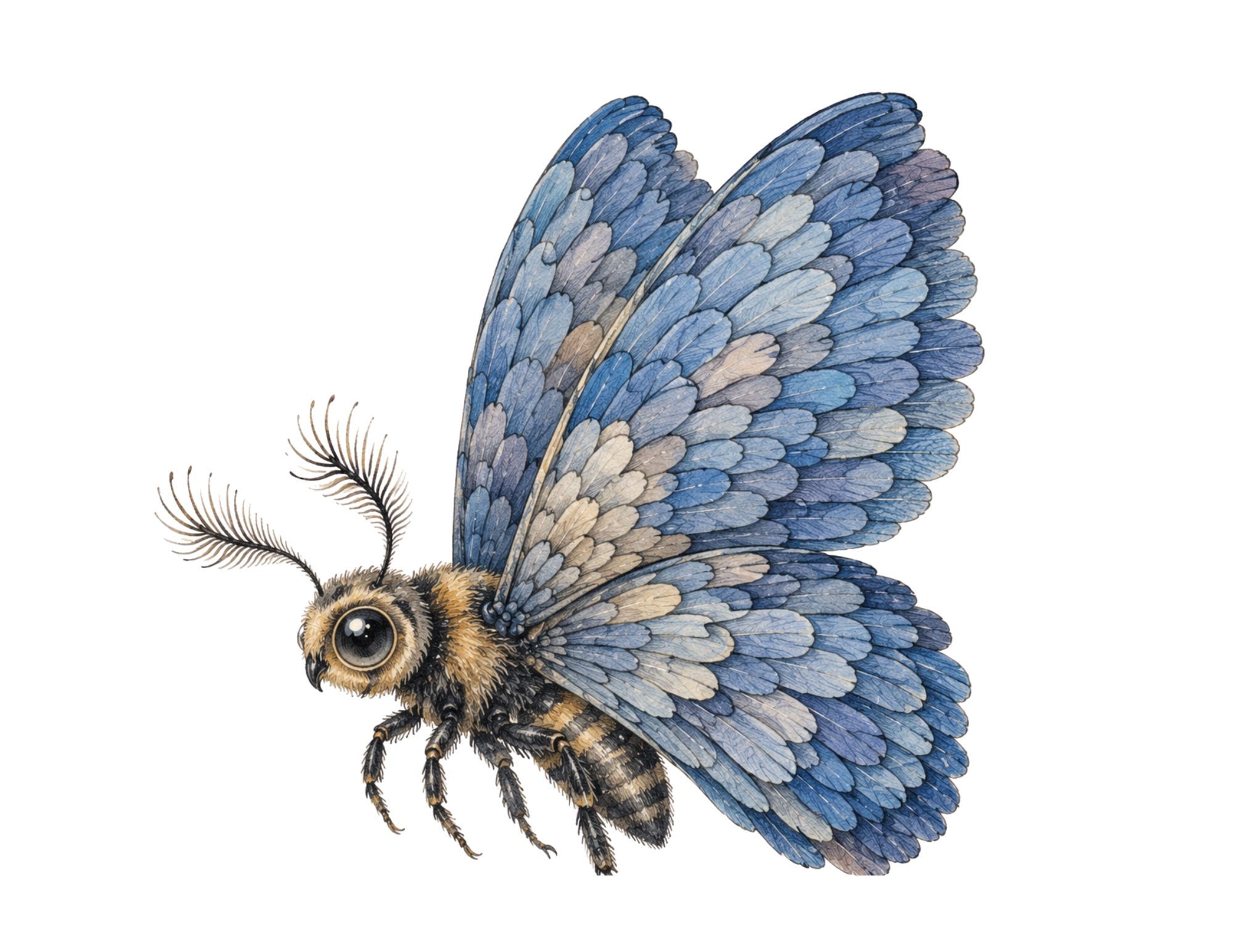
YOU FOUND THETHE Pollinator
In the Pollinator’s world, the creatures that spent millennia evolving to fit each other perfectly can’t find each other anymore. The flowers shaped to the hummingbird’s beak were overtaken by invasive species like French broom and English ivy— plants that have no relationships with the insects or animals of the Bay, but are very good at taking their space. And the more aggressive pollinators that human movement brought into the Bay from other regions out-competed many of the native ones, leading the whole native ecosystem to collapse.
Scientists knew they needed to act fast to bring back the essential plants and insects. They attempted to recreate the Mission Blue Butterfly, but with a special ability to pollinate any native plant. Unfortunately, the end result was a hybrid of a number of native pollinator species, resulting in our beautiful little monster that unfortunately isn’t the perfect match for any of the them. It projected itself here to help us explore ways to protect our native species, reduce the invasive species, and build back the resilient ecosystems that are a perfect match for this place.
What kinds of culture and design could we build to increase the native plants and pollinators while reducing the invasive and dangerous ones?
FIELD NOTES
How you Can Help the Pollinator’s Mission
The Mission blue butterfly is one of the Bay Area's most iconic endemic species, meaning they are only found in a handful of coastal grasslands right here in the San Francisco Peninsula! They rely entirely on native lupine plants where females lay their eggs and caterpillars feed during the earliest stages of life.
Native bees also rely on the region's diverse native wildflowers for nectar and pollen, while simultaneously pollinating the very plants that sustain them. Together these native pollinators illustrate how important it is for their matchmaking to remain sustainable for not only the insect and the flower, but for all the other plants and animals that rely on the fruits of their labor, including us humans!
Volunteer with San Francisco Habitat Stewards
to restore native grasslands and coastal habitats.
Plant native plants in your own garden
with the California Native Plant Society’s guides to bring back the locals.
Get to know invasive species in California
and remove them where appropriate to make room for our native friends.
Help out the Mission blue butterflies
by volunteering with the San Bruno Mountain Watch Mission Blue Nursery.
Transition your home garden to a pesticide-free zone.
Visit native plant gardens around the city
with the San Francisco Pollinator Habitat Gardens interactive map.
Eat local foods in season
to support the cycles of life that nature intended.
Share accurate stories of our region’s native pollinators
to spread awareness on how these systems flourish when we make room for the locals.
NEXT UP
SCOUTING SPOT #3From pharaohs to groves, the shape makes a point,
And this one's an urban retreat,
Near the entrance outside is your creature's checkpoint,
Like a sphinx, but with fungi for feet!
✦ Enter the general landmark as two words, all lowercase, no spaces. ✦