R
YOU FOUND THETHE guardian
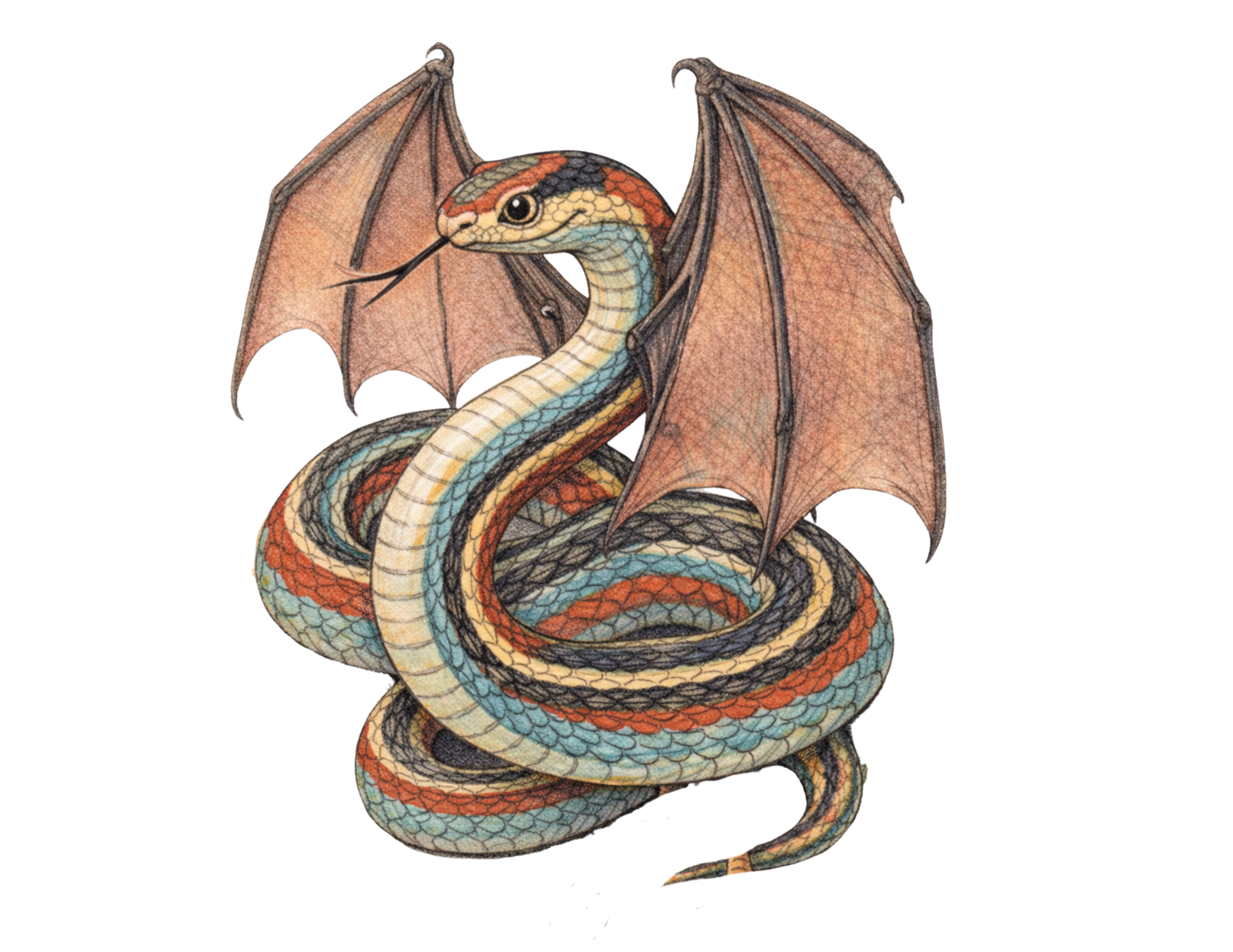
The Guardian comes from a world where no one cared much about it. Snakes, bats, spiders – these creatures that we’re told are scary – when their populations started to decline, no one was there to fight for them. But their roles were essential. The snakes kept the rodent populations under control and the birds well-fed. The bats pollinated the landscape and fertilized nearby grounds. And the spiders kept the insects from taking over.
Scientists decided to bring them back, combining them to give them the special ability to accomplish their critical jobs more efficiently – a snake that can fly can get a lot more rodents under control! And in their world, they really needed the help. But the people were afraid of the flying snakes and The Guardian was chased out. It came here today in hopes of making friends, so that maybe by the time their future arrives, people care enough to protect them too.
What kinds of culture and design would help us break stereotypes and better understand and respect all of the roles in our local environment?
FIELD NOTES
How you Can Help the Guardian’s Mission
Although they live very different lives, garter snakes and bats are both mid-level predators that help maintain balance in Bay Area ecosystems. And they both have gotten a bad rap, being labeled as scary, creepy, or unwanted.
Garter snakes, listed as federally and state endangered, hunt amphibians, fish, slugs, worms, and small rodents in wetlands, riparian corridors, grasslands, and creek systems. They help regulate prey populations and are themselves an important food source for hawks, herons, coyotes, and larger mammals.
All 13 native Bay Area bat species are insectivores who consume massive quantities of night-flying insects like mosquitoes, wasps, and agricultural pests, protecting the local ecosystem and reducing reliance on chemical pesticides. Some species also pollinate flowers and disperse seeds, making them important contributors to ecosystem health beyond simply controlling insects.
These animals are indicator species that depend on connected habitats across wetlands, tidal marshes, urban creeks, forest edges and riparian corridors. If bats and snakes are thriving, chances are many other species are too.
Learn about bats in the Bay Area
and how to help keep them safe with resources from the Golden Gate National Parks Conservancy.
Have you found an injured bat? Don’t handle it yourself.
Call NorCal Bats for emergency bat rescue.
Learn about bat conservation in San Francisco
and how to help keep the deadly white nose syndrome out of our Bay Area.
Help protect garter snakes in San Francisco
with resources from the Richardson Bay Audubon Center.
Learn more about how the Center of Biological Diversity is helping
the San Francisco garter snake make a comeback.
NEXT UP
SCOUTING SPOT #6From sea star to sea star, the patch is the key,
Where the past, present, and future collide,
In a tucked away cove where your kids can climb free,
Your last messenger thrives near the tide.
✦ Enter the destination as two words, all lowercase, no spaces. ✦