E
YOU FOUND THETHE Bay Builder
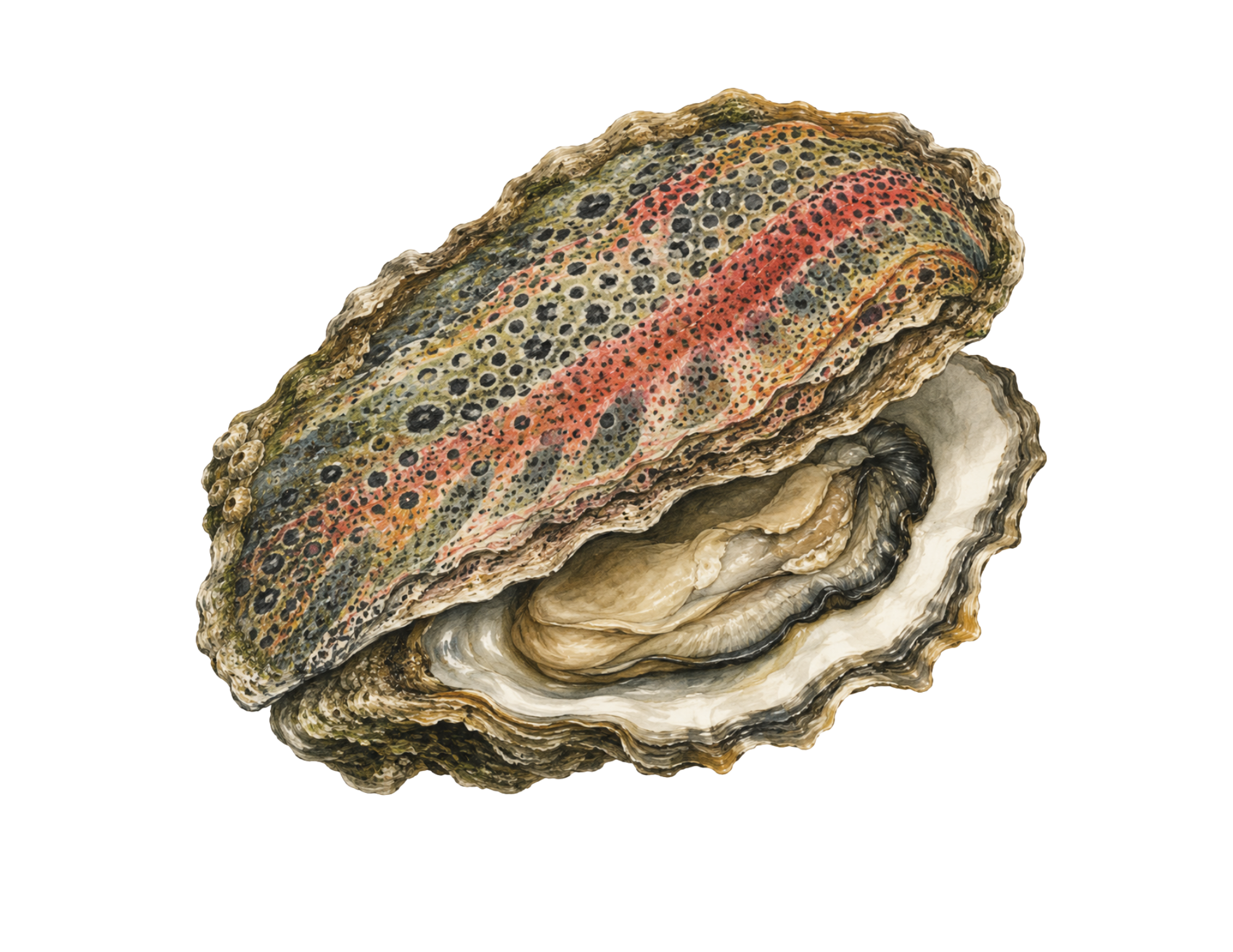
In the Bay Builder’s future, the waters around the city are dark and lifeless. The Bay was kept clean enough for life by life –creatures that filtered it, like oysters. As we lost our local biodiversity, the animals that kept the Bay tidy were one of the first to go. And the Bay got sicker and sicker, until nothing could survive in its waters.
Scientists decided their best chance at restoration was to create a superpowered oyster, the size of a salmon and able to take in tons of dirt and grime at a time. They nailed the size, and it even took on some of the native salmon species beautiful scales, but it also took on its ability to swim. It turns out that swimming oysters aren’t particularly good at filtering the tides as they rush by. It projected itself here to teach us what oysters need to thrive today, so they can make sure everything else is thriving later.
What kinds of culture and design could we build to ensure we are taking care of the health of the waters around our city?
FIELD NOTES
How you Can Help the Bay Builder’s Mission
Native Olympia oysters are ecosystem engineers that filter water, improve water quality, and create complex reef habitats that support fish, crabs, invertebrates, and other marine life. They are invaluable to cleaning up the waterways of the Bay Area, but they are not safe to eat. That’s because they have been busy cleaning up industrial pollution, agricultural runoff, and heavy metals in the Bay's sediment.Their role is vital, but you should never forage or harvest them.
Salmon migrate between freshwater rivers and the ocean, connecting entire watersheds as they transport marine nutrients upstream and freshwater energy back toward the sea.The Bay acts as the vital gateway for native Chinook (King) salmon migrating from inland rivers to the Pacific. Their survival is a key indicator of Bay Area watershed health, while their runs support massive local fishing and tourism industries.
Although they occupy different habitats and have different life histories, oysters and salmon are both indicators of healthy, connected waterways. One cleans them up and the other swims through them, both show us what swimmable bays should look and feel like.
Learn more about how to monitor when and where it’s safe to swim in the Bay Area.
Volunteer with the Wild Oyster Project
to help restore the Olympia oyster reefs in San Francisco.
Get out on the water in a kayak or paddle board
with the SF Water Trail map to put yourself in the habitats of these animals.
Volunteer with the Wild Oyster Project’s Save your Shucks program.
Restaurants, become a partner with the program to turn your oyster shells into new structures for oyster restoration.
Learn about the native salmon that live in the Bay Area and the state.
Read more about how Chinook salmon are making a comeback in the Bay Area.
Eat local and sustainable seafood in the Bay Area
to help keep marine ecosystems healthy and thriving.
Thank you to our contributing experts at Swimmable San Francisco Bay and the Wild Oyster Project for resources and insights.
YOU DID IT!
CLAIM YOUR PRIZE!Your journey's complete, now it’s time to play,
amongst futures both wild and wise,
your final stop is a few blocks away,
named after your last creature's prize.
✦ Enter the destination as two words, all lowercase, no spaces. ✦