U
YOU FOUND THETHE Tidekeeper
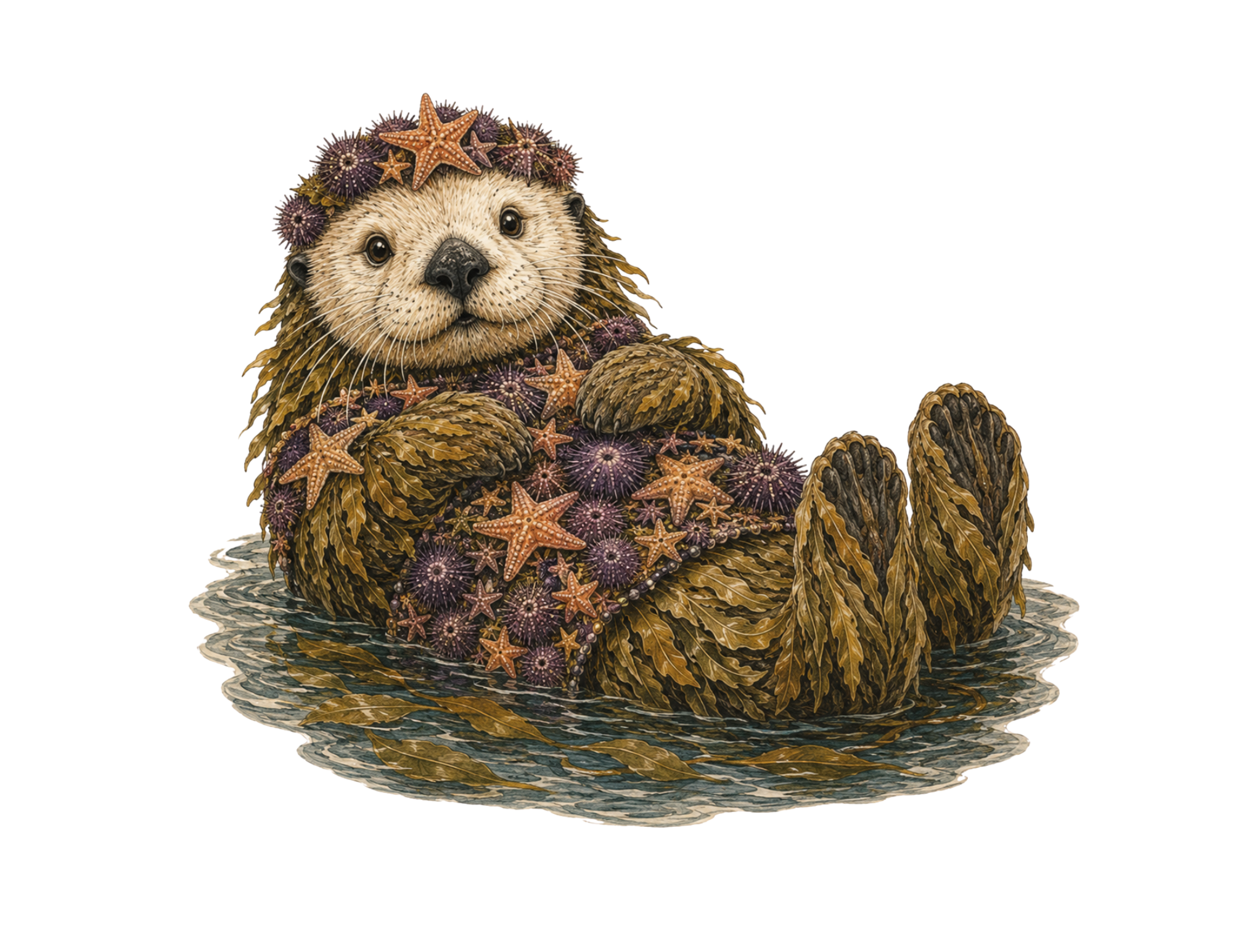
Meet the Tidekeeper, coming from a world where the loss of critical species led to whole ecosystem collapsing. When the fish started dying, so did the animals that ate them. When the otters were hunted, the sea urchin population (one of their favorite treats) exploded – destroying the kelp forests that were so essential to others. Individual losses interrupted the balance of a fragile ecosystem, and before long, only the best scavengers were left.
Scientists knew their world depended on repair. They attempted to re-create three critical species that had been lost: an otter, a sea star, and kelp. Their goal was for them to have the special ability to reproduce on their own, until the population hit sustainable levels, but it ended up becoming an entire food chain in a single creature! And of course, the clever sea urchin managed to sneak itself into the mix.
The Tidekeeper projected itself here to help us understand the interconnectedness of all things in nature, and the importance of treating every small role in the ecosystem as critical to the whole – because it is!
What kinds of culture and design could we build to minimize loss of – and even restore! – biodiversity in our city habitats?
FIELD NOTES
How you Can Help the Tidekeeper’s Mission
Kelp forests are some of the state’s most iconic underwater ecosystems that create habitat for hundreds of marine species while also absorbing carbon, buffering coastlines from storms, and supporting fisheries. The dynamic balancing of these forests is constantly in flux as predators and prey push and pull on the system, keeping everything in check. Sea otters, sea urchins, and sea stars are the key players in this balance.
Sea otters once thrived by the thousands throughout the San Francisco Bay, but when they were hunted to near-extinction during the 18th and 19th-century fur trades, populations plummeted. Today's wild populations stem solely from a tiny group that survived in Big Sur. When sea otters left the scene, their main food source, the sea urchins took over. A few more sea urchins don’t create a major shift, but left unchecked for too long and they’ll eat up all the budding kelp bulbs just taking root on the sea floor.
To solve the problem of rampant sea urchins, sea star restoration teams, like those focused on the Sunflower star, got to work to breed and repopulate another predator that could help bring back the balance. While these animals are all finding their way back to healthy levels, we can step in and provide assistance to get kelp forests back into their natural rhythm.
Visit the Sunflower Star Lab in Moss Landing
for their open tour on July 11 to see how local researchers are helping bring back key predators.
Learn more about sea otters in the San Francisco Bay
and volunteer with the Sea Otter Savvy Project.
Uncover the Mysterious World of Bull Kelp
to learn how this local kelp species is sustaining entire ecosystems in the North Pacific Coast.
Check out the award-winning film, Sequoias of the Sea,
produced by the International Ocean Film Foundation and get in touch for private screenings.
Watch how restoring Sunflower stars is helping to keep the balance in the Bay Area.
Volunteer with the Sunflower Star Lab
to help bring back these key species and contribute to restoring the balance of our California kelp forests.
Become a citizen scientist
and report sightings of Sunflower stars anytime you are out in the water.
Help monitor reefs here in California
and around the country with Reef Check’s resources for marine ecosystems.
Thank you to our contributing experts from the International Ocean Film Foundation and the Sunflower Star Lab for resources and insights.
NEXT UP
SCOUTING SPOT #5It's scary at first, but there's nothing to fear,
This creature is here to be healed,
Near picnics and pups, it can hear the crowd cheer,
In the park straight across from the field.
✦ Enter the destination as two words, all lowercase, no spaces. ✦